The Invisible Workshop: Unveiling Gender Gaps in India's Unincorporated Sector
India’s unincorporated sector is the backbone of its economy, providing livelihoods to millions. However, a closer look at the latest Annual Survey of Unincorporated Sector Enterprises (ASUSE) 2023-24 reveals a stark reality where the entrepreneurial journey for women is fundamentally different and significantly more constrained than for men.
ASUSE survey is devoted exclusively to an integrated survey on economic and operational characteristics of unincorporated non-agricultural enterprises in manufacturing, trade and other services sectors to supplement the corporate sector data. Unincorporated non-agricultural establishments include proprietary and partnership establishments (excluding Limited Liability Partnership (LLP) establishments), any society,trust,association,club or body of individuals or Co-operatives, Self-Help Groups (SHGs), Non-Profit Institutions (NPI/NPISH), etc which are neither registered under Companies Act, 1956 nor under Companies Act, 2013. It also includes companies not registred under Sections 2m(i) and 2m(ii) of the Factories Act, 1948.
The unincorporated sector has shown robust growth, with the number of establishments rising from 6.50 crore in 2022-23 to 7.34 crore in 2023-24, a remarkable 12.84% increase. The number of establishments in the “Other Services” sector recorded a growth of 23.55% followed by a 13% increase witnessed by the manufacturing sector. During the same period, the Gross Value Added (GVA) which is a key indicator of economic performance rose by 16.52% driven by a 26.17% growth in ‘other services’ sector.
In this post, we break down seven key data points that illustrate these “invisible Workshops” where India’s women entrepreneurs operate.
1. The Invisible Workshop
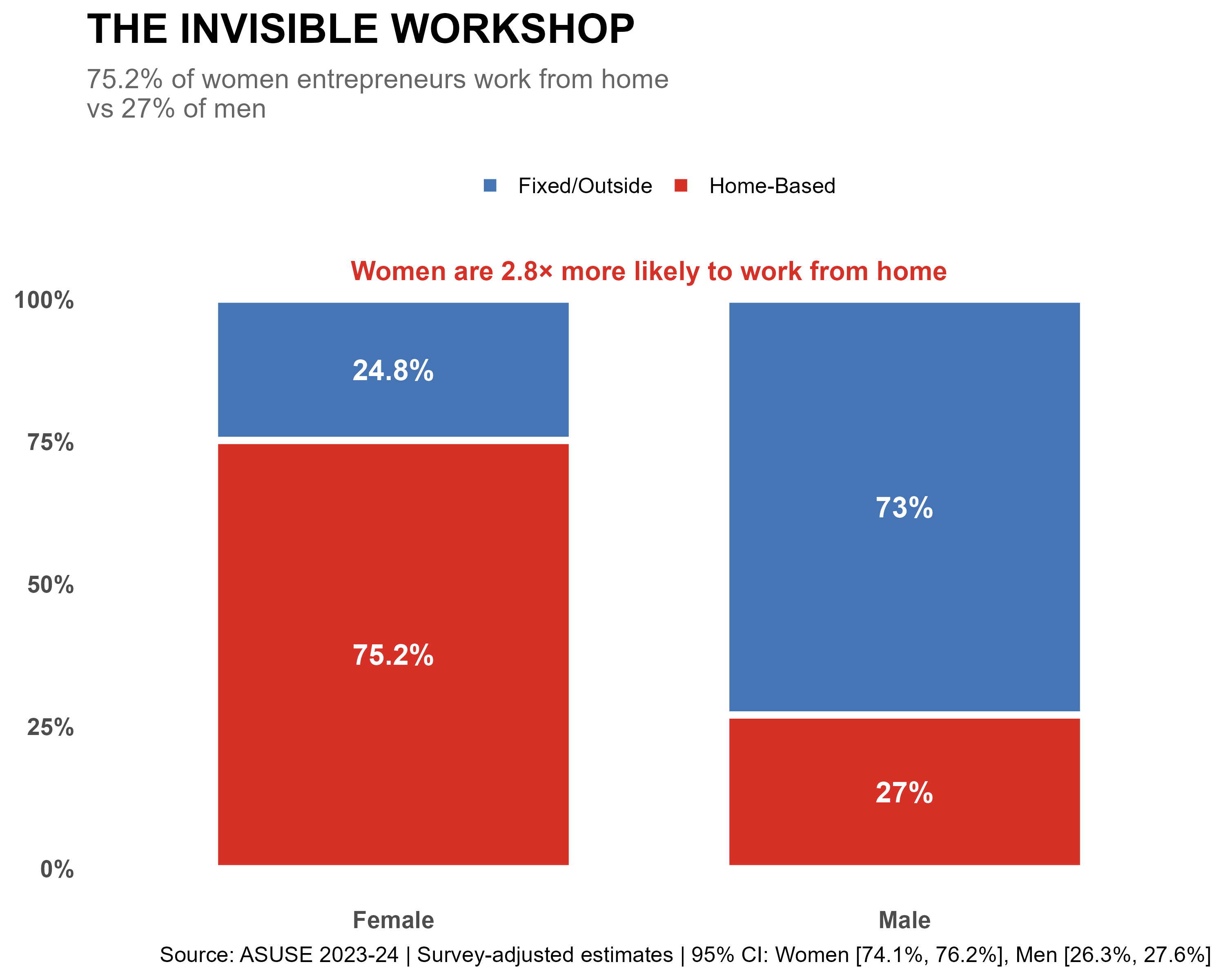
For most women in India, the “factory floor” is their own living room. A staggering 75.2% of women entrepreneurs work from home, compared to just 27% of men. While home-based work offers flexibility, this means businesses are small and “invisible” to formal support systems.
2. What ‘Manufacturing’ Really Means
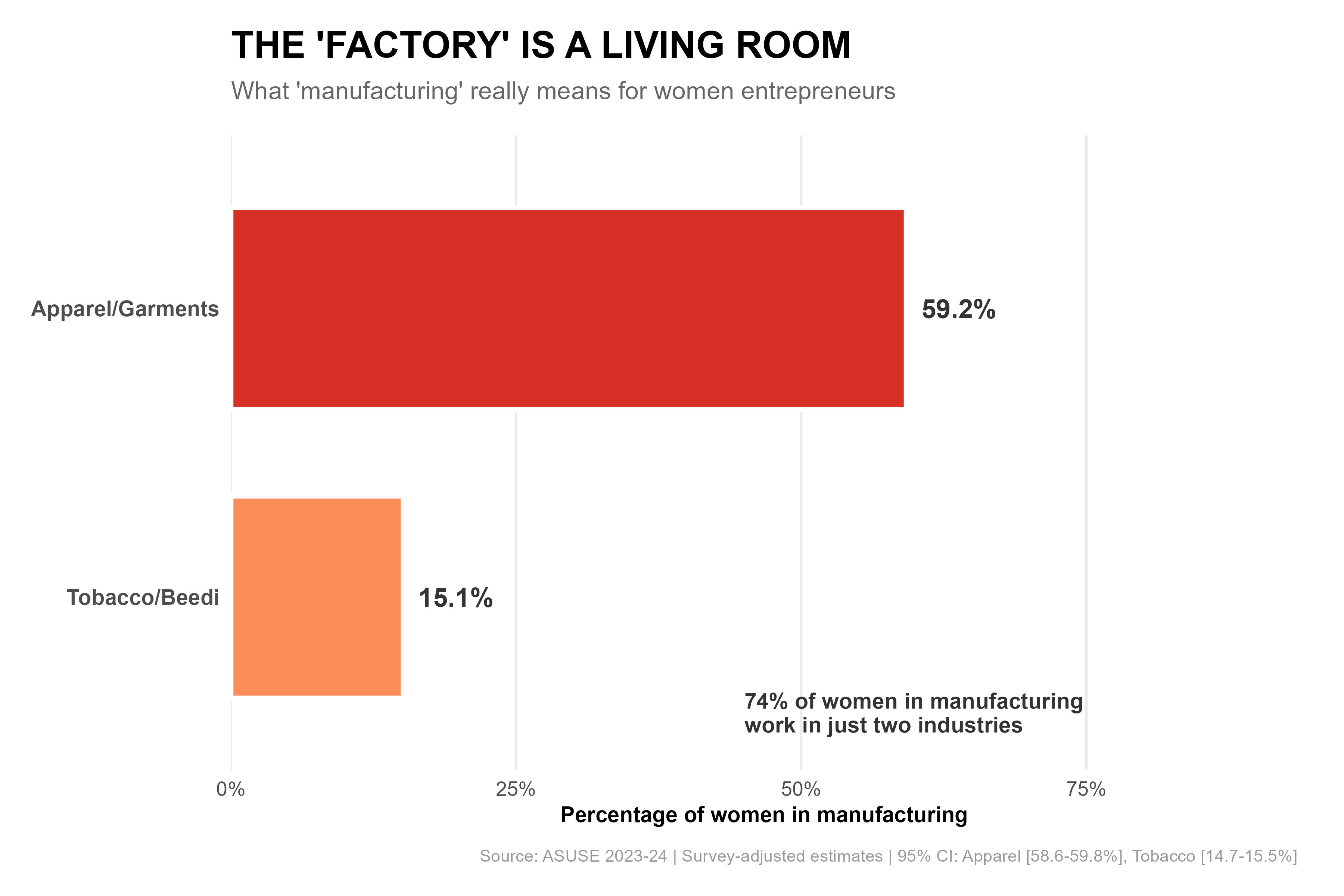
When we talk about women in manufacturing, we are often talking about two specific industries. 59% are in Apparel and Garments, and 15% are in Tobacco (Beedi) rolling. This high concentration in low-margin, labor-intensive sectors highlights the lack of industrial diversification for women.
3. The Solopreneur Trap
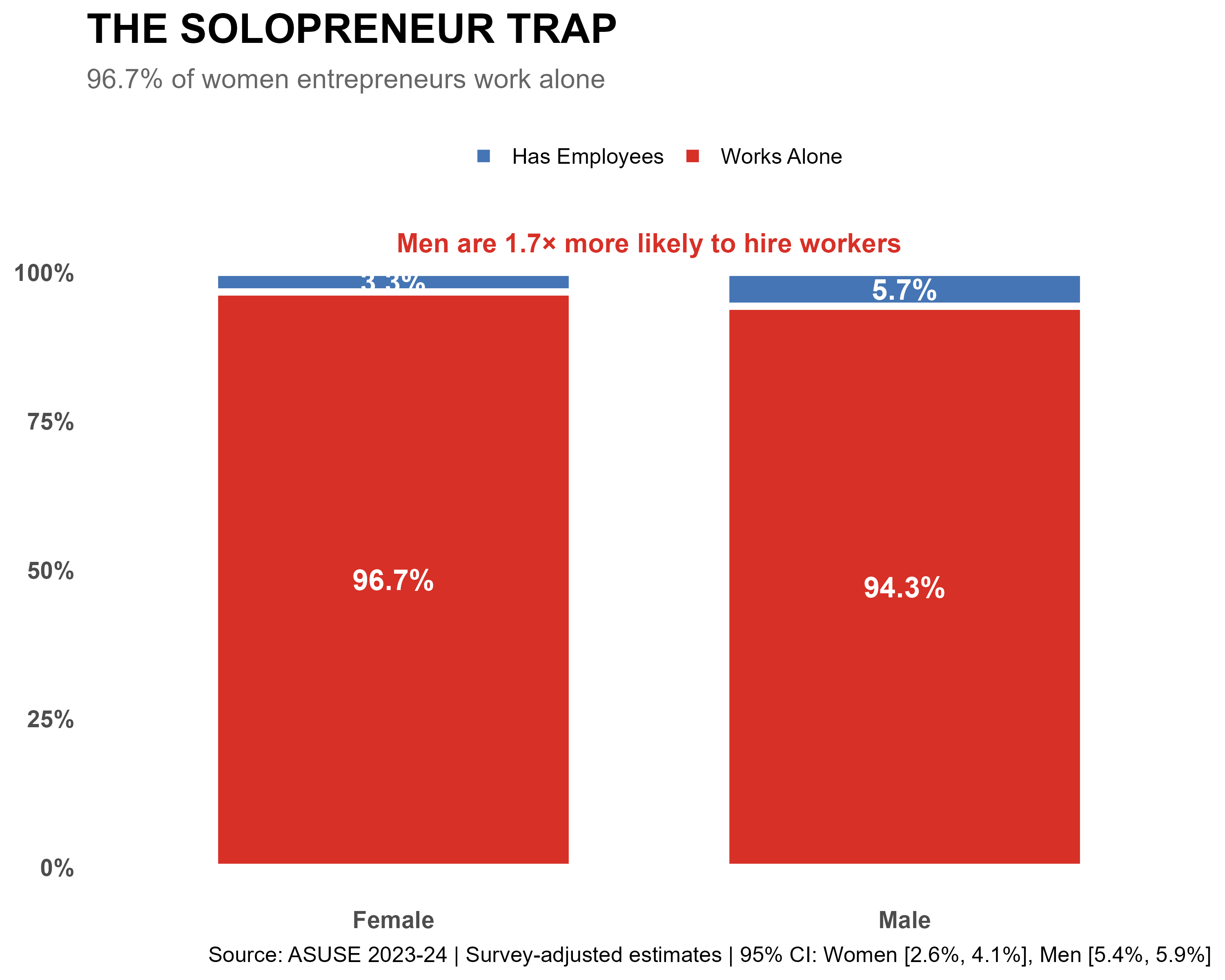
Scaling a business is a monumental challenge for women. Only 3.3% of women-owned enterprises have any hired workers. The rest are “solopreneurs” who manage everything themselves, compared to nearly triple the hiring rate for men.
4. The Paper Ceiling
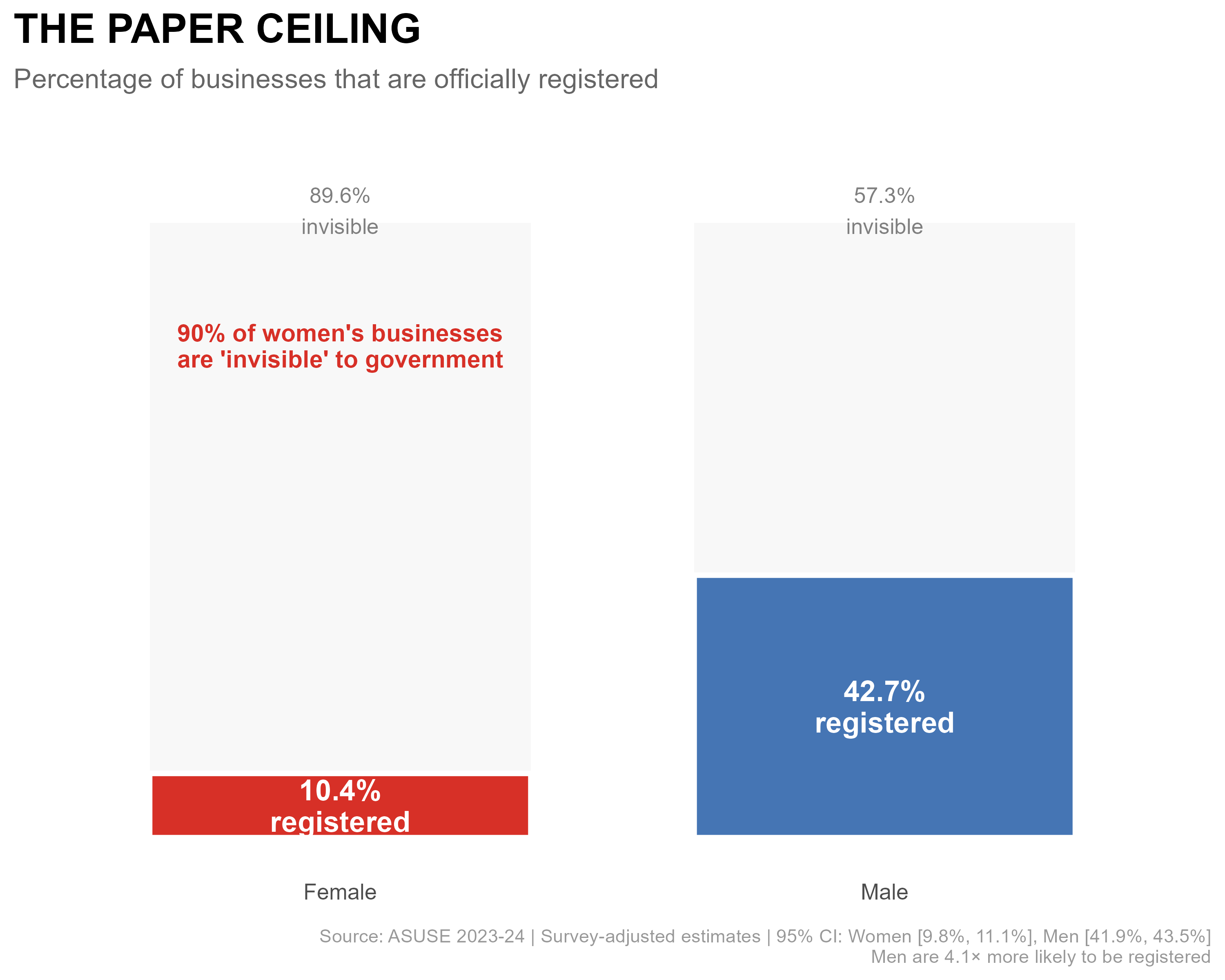
Formalization remains a distant dream for many. 90% of women-owned businesses remain unregistered, cutting them off from government schemes, formal credit, and legal protections. Men are 4.7x more likely to have their businesses officially recognized.
5. The Sisterhood Effect
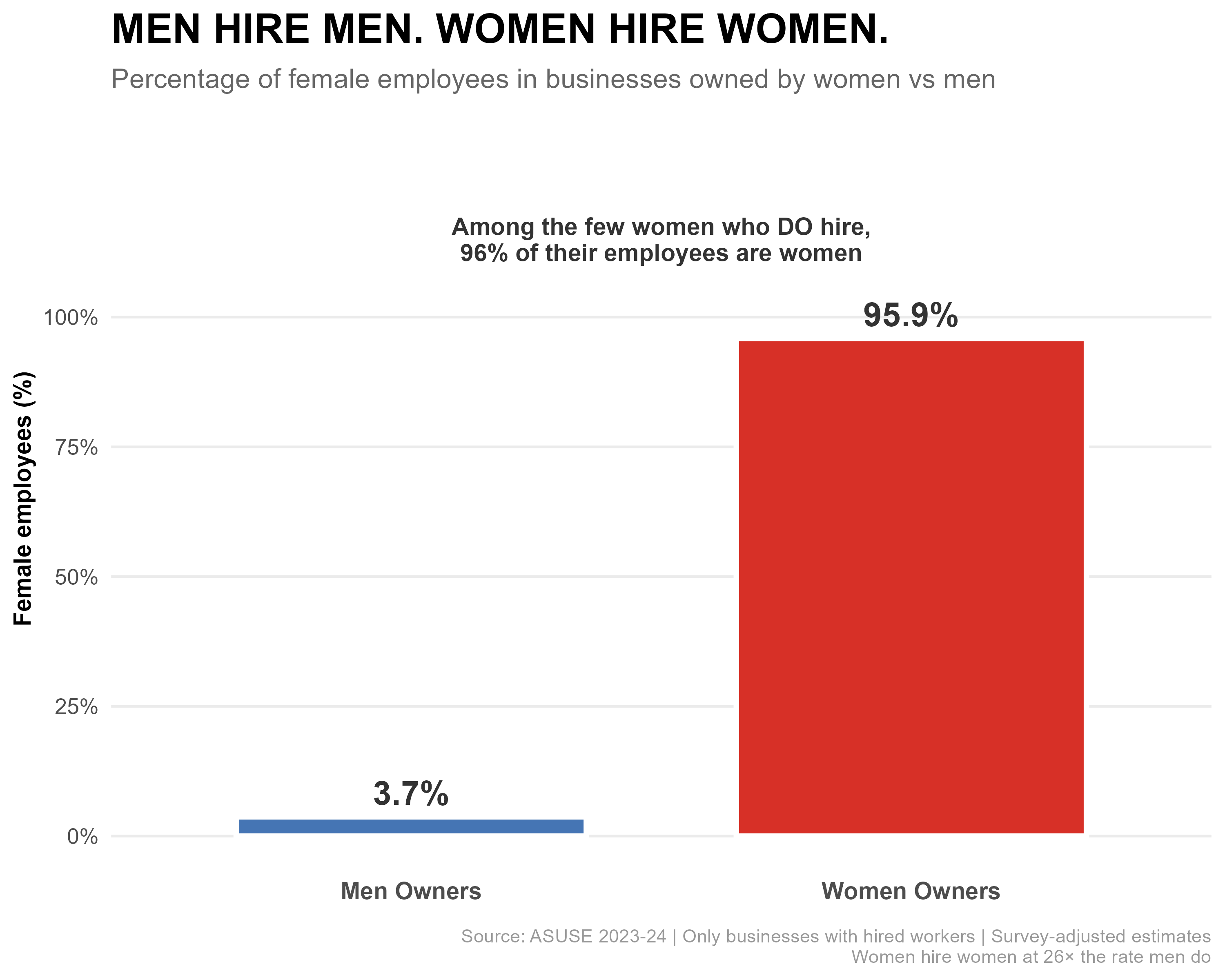
One of the most powerful findings in the data is the “Sisterhood Effect.” When women do scale and hire, they create a safe harbor for other women. Women owners hire other women at 26 times the rate that men do—emphasizing that investing in women entrepreneurs is a direct investment in the female labor force.
6. The Digital Divide
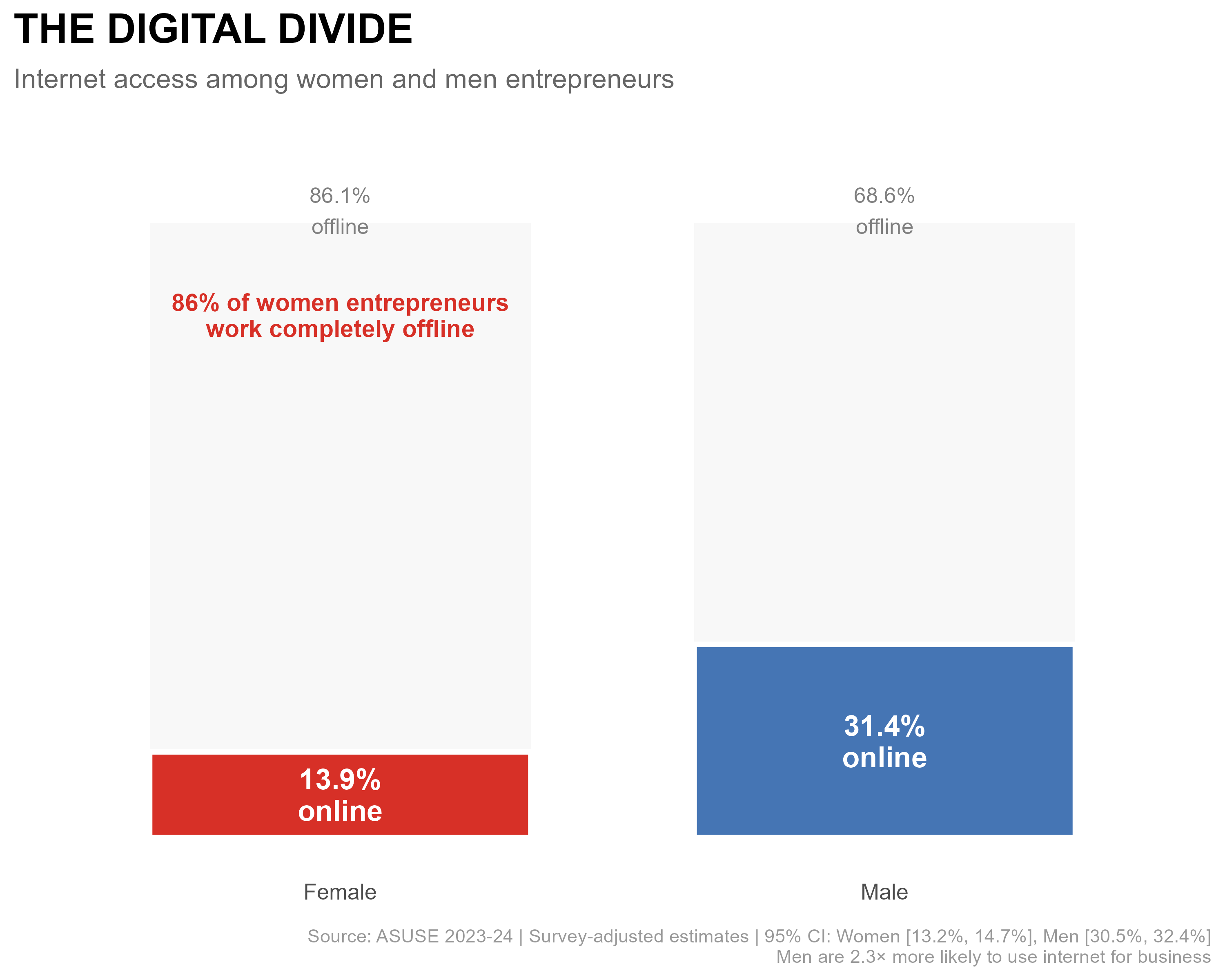
In an increasingly digital economy, women are being left behind. 86% of women entrepreneurs operate completely offline. Men are 2.3x more likely to use the internet for their business, a gap that threatens to widen the economic divide as services move online.
7. The Credit Gap
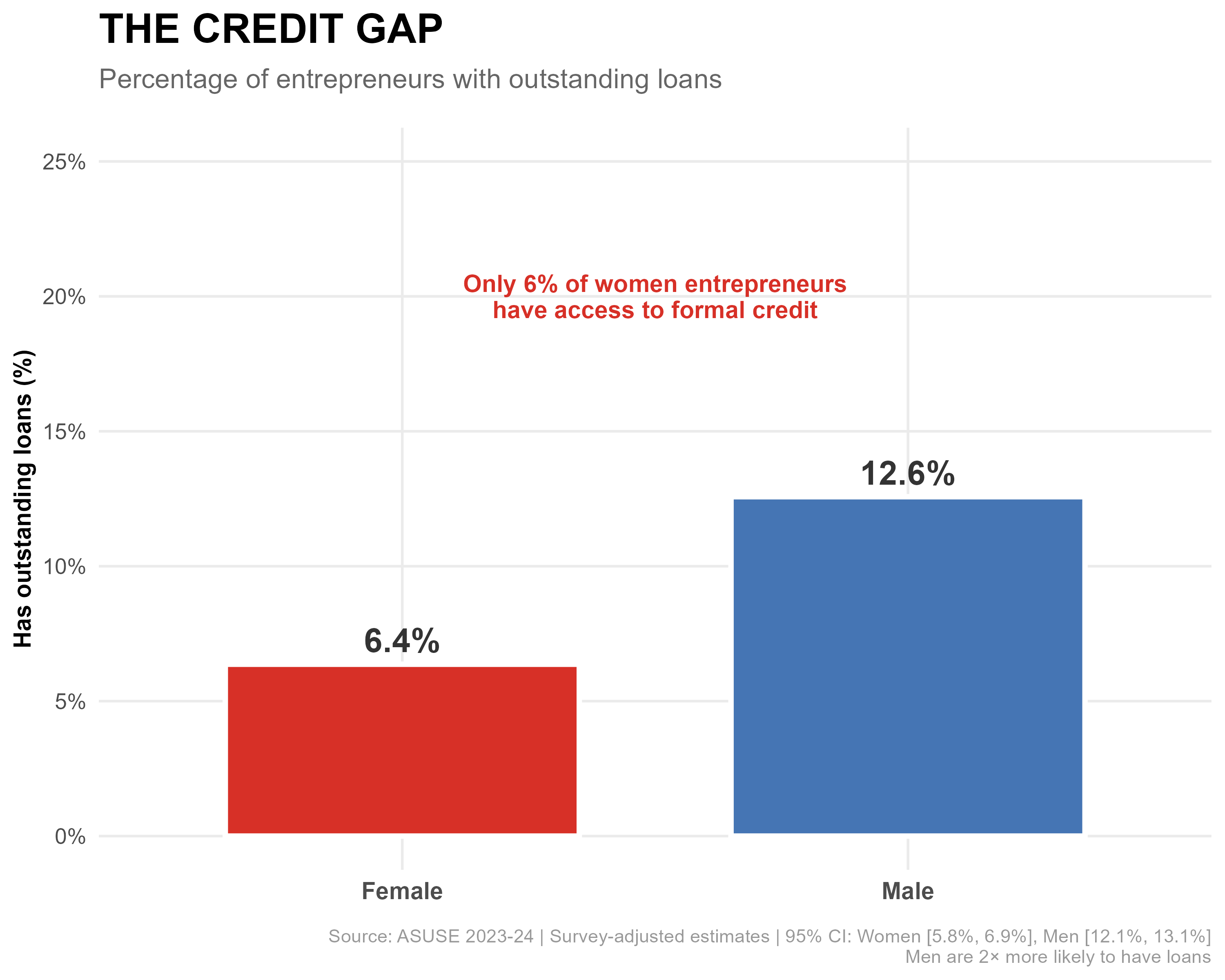
Finally, the “Credit Gap” remains a significant hurdle. Only 6% of women entrepreneurs have access to formal loans, a barrier that prevents them from buying equipment, expanding premises, or surviving economic shocks.
Conclusion
The data from ASUSE 2023-24 tells a clear story: women entrepreneurs in India are not just “smaller” versions of male ones. They operate in different spaces (the home), different sectors (apparel/tobacco), and face unique barriers to technology and credit.
Closing these gaps isn’t just about equity—it’s about unlocking the economic potential of half the country’s population.